
What Is Pet Insurance?
Pet insurance helps cover eligible vet bills in exchange for a monthly premium. Learn how it works, the main types of plans, what’s typically covered and excluded, average costs for dogs and cats, and when to enroll your pet.

Written by
Jason Devaney
Reviewed by
Kate Yanov, Licensed Broker
Focus
Pet Guides
Pet insurance reimburses pet owners for veterinary costs covered under their policy. Pet owners pay a monthly premium in exchange for the insurer covering a percentage of qualifying expenses. Coverage options and exact costs vary by carrier and the plan you choose.
How Pet Insurance Works
When you enroll in a pet insurance plan, you choose a deductible, a reimbursement percentage, and an annual coverage limit. If your dog or cat gets injured or sick, you take them to a licensed veterinarian and pay the full amount due for any treatment. Then you submit a claim to your insurance company with an itemized invoice of the treatment cost. The insurer reviews the claim and, if it’s approved, applies your deductible and reimburses you for the covered amount.
Deductibles generally range from $100 to $5,000, while reimbursement rates usually range from 70% to 90%. A lower deductible and higher reimbursement rate mean you pay a higher monthly premium, but your claim payout will be higher.
Many new policies also include a waiting period before coverage begins. Accidents are often covered within 24 hours, and illness coverage typically starts around two weeks after your policy goes into effect. For orthopedic conditions, expect a six-month waiting period in most cases.
Types of Pet Insurance Plans
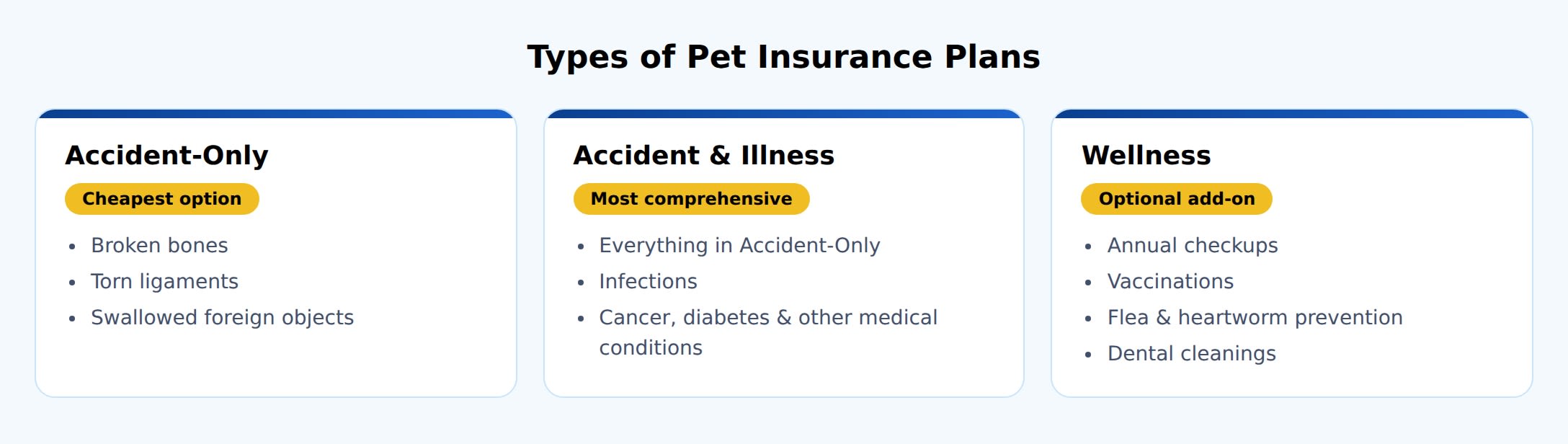
There are three tiers of pet insurance coverage, and understanding the differences between them helps you choose the best one for your budget and your pet.
Accident-Only Plans
These cover injuries such as broken bones, torn ligaments, or swallowing a foreign object. They do not cover illnesses. Accident-only plans are the cheapest option and appeal to owners who mainly want protection against sudden, unpredictable events.
Accident and Illness Plans
In addition to accidents, these cover illnesses such as infections, cancer, diabetes, and other medical conditions. They are the most comprehensive policy type.
Wellness Plans
Wellness or preventive care add-ons are optional riders that reimburse routine costs like annual checkups, vaccinations, flea and heartworm prevention, and dental cleanings. These can help spread out the cost of regular vet visits over the course of a year. Some veterinarians also offer wellness plans.
Credit: PawPay
What Pet Insurance Covers
Accident and illness plans typically cover a wide range of veterinary care tied to a diagnosed medical issue. That includes emergency treatment for accidents, like broken bones or ingested objects, as well as illnesses such as infections, allergies, diabetes, and cancer. Diagnostic work like bloodwork, X-rays, and MRIs is usually covered when it’s tied to diagnosing or treating a covered condition, along with the resulting surgery, hospitalization, and prescription medication.
Most plans also cover hereditary and congenital conditions, which are health issues a pet is predisposed to based on breed or genetics, such as hip dysplasia in larger dog breeds. Keep in mind that some insurers cap coverage for these conditions differently than they do for accidents or unrelated illnesses.
Before you sign up for a policy, it’s worth looking into what your plan and provider would cover.
What Pet Insurance Doesn’t Cover
Pet insurance generally doesn’t cover pre-existing conditions, though some insurers may cover a curable condition once it has fully resolved. That includes not only illnesses like cancer, but also any injuries your pet suffered before you signed up for the policy or during the applicable waiting period.
Routine and preventive care is typically excluded from standard accident and illness plans, which is why wellness add-ons can be a good idea. Elective and cosmetic procedures, breeding and pregnancy-related costs, and services like grooming or boarding also generally fall outside what a standard policy will reimburse.
How Much Does Pet Insurance Cost?
Accident and illness plans average just under $70 per month for dogs and about $36 per month for cats, according to the North American Pet Health Insurance Association. https://naphia.org/ Those are averages, and your actual cost might be higher or lower depending on the deductible and coverage limits you choose.
Accident-only plans average about $16 per month for dogs and $9 per month for cats. Wellness plan add-ons could raise your total monthly premium to about $118 for dogs and $72 for cats.
Premiums for a young, healthy pet cost less than a policy for a senior pet, since older animals are statistically more likely to need care. Their breed also plays a role because some animals are predisposed to certain conditions. For example, a small mixed-breed dog might cost $30 to $40 a month to insure, while a Rottweiler or French bulldog might be $80 or more. Location affects pricing because vet costs can vary by state.
NAPHIA reports that in 2025, the most expensive claim paid out for a dog was $66,600 for a chronic undiagnosed illness for a Bernese mountain dog in Philadelphia. For cats, the largest claim payment was $51,600 for an American shorthair afflicted with cancer.
How to Choose a Pet Insurance Provider
Like all insurance products, it’s a good idea to get multiple quotes for pet insurance before signing up. Compare similar policies with the same (or roughly the same) coverages and limits.
It’s also worth reading how each insurer handles claims, including average reimbursement turnaround time and how straightforward the claims process is. Some insurers and third-party services like PawPay https://pawpay.com/pet-parent offer direct pay at participating veterinary hospitals, meaning you don’t have to cover the full bill upfront.
When to Enroll Your Pet
Because pre-existing conditions are generally excluded, enrolling in pet insurance while your pet is young and healthy often makes the most financial sense. Premiums also tend to be lowest for young pets.
Some insurers do set an upper age limit for new enrollments, so an older pet that has never been insured may have fewer provider options or higher premiums than a pet enrolled as a puppy or kitten. That said, most companies don’t cancel or reduce coverage for a pet who ages while already on a policy.
Common Conditions That Affect Pets
According to industry data from NAPHIA, the most common medical conditions that affected dogs in 2025 were GI issues, ear infections, skin conditions, anxiety/behavioral conditions, and allergies. Cats were most afflicted with GI issues, dental disease, urinary tract infections, anxiety/behavioral conditions, and respiratory problems.
FAQ
Can I use pet insurance at any veterinarian, or only ones in a network?
Most pet insurance plans let you visit any licensed veterinarian, including emergency animal hospitals and specialty or referral clinics. Unlike human health insurance, there’s typically no network to stay within.
Is pet insurance tax-deductible?
Pet insurance premiums generally aren’t tax-deductible. There are exceptions for service animals or animals used for business purposes, so it’s worth checking with a tax professional if that applies to your situation.
Can I get pet insurance for a pet with a pre-existing condition?
Having a pre-existing condition doesn’t disqualify a pet from getting insured. The insurer just won’t cover costs related to that specific condition, while other, unrelated accidents and illnesses would still be eligible for coverage.
Keep the thread going
 3 min
Pet Insurance That Pays the Vet Directly
Most pet insurance makes you pay the vet first and wait for a claim payout. Learn how vet direct pay works, its pros and cons, and how platforms like PawPay pay the clinic so you only cover your share at checkout.
Open next guide 3 min
How Much Is Pet Insurance?
Pet insurance averages about $70 a month for dogs and $36 for cats on an accident-and-illness plan. See what drives your premium, typical costs by plan type, what vet care costs, and practical ways to save.
Open next guide 3 min
What Does Pet Insurance Cover?
What pet insurance covers depends on your policy type. Learn how coverage works for accidents, illnesses, hereditary conditions, cancer, dental, and end-of-life care, and which costs are commonly excluded or need an add-on.
Open next guide