
What Does Pet Insurance Cover?
What pet insurance covers depends on your policy type. Learn how coverage works for accidents, illnesses, hereditary conditions, cancer, dental, and end-of-life care, and which costs are commonly excluded or need an add-on.

Written by
Jason Devaney
Reviewed by
Kate Yanov, Licensed Broker
Focus
Pet Guides
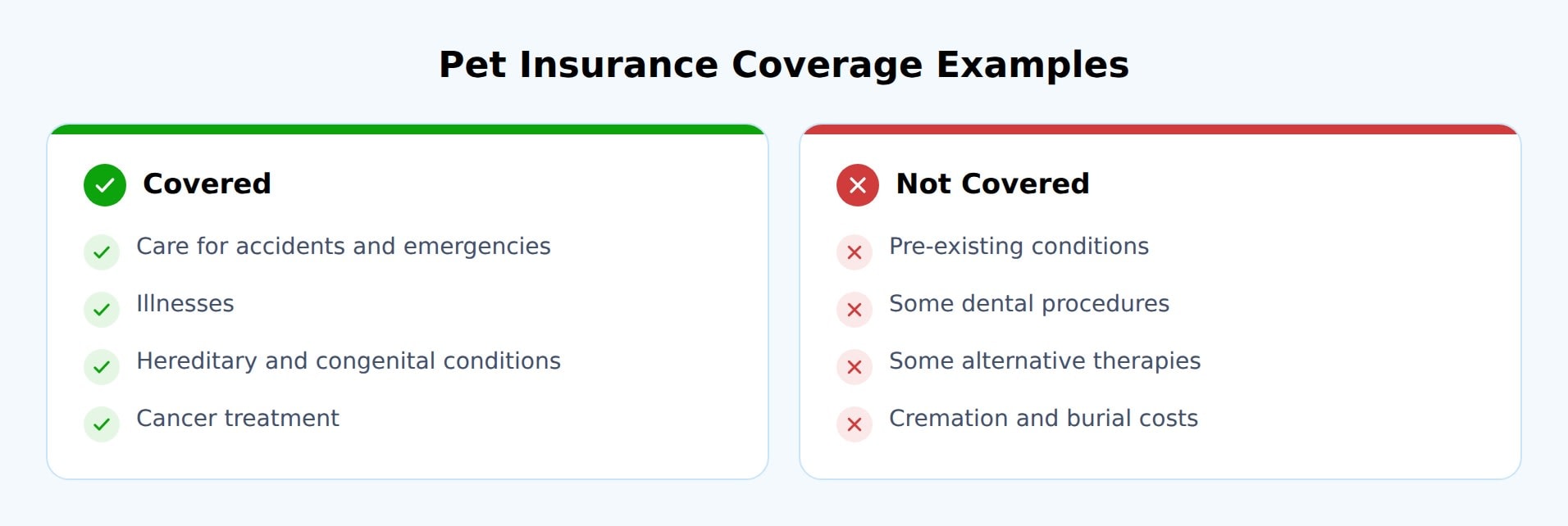
What pet insurance covers depends largely on the type of policy you have. Pre-existing conditions, however, are generally excluded.
Accidents and Emergency Care
Accident coverage applies to sudden, unexpected injuries: bite wounds, bee stings, broken bones, being hit by a car, cuts and lacerations, swallowed objects, and more. These claims tend to be the most straightforward to get approved, since there’s usually a clear event and a clear injury tied to it.
Coverage extends to everything that’s part of the treatment, such as X-rays, bloodwork, ultrasounds, surgery, hospitalization, and any follow-up medication. Accident coverage also tends to kick in fastest, since most insurers waive or shorten the waiting period for accidents compared with illnesses.
Illnesses and Chronic Conditions
Illness coverage includes things like allergies, arthritis, diabetes, ear and urinary tract infections, thyroid disorders, heart and kidney disease, and skin conditions. As with accidents, any related treatments are covered as well. A chronic condition diagnosed while your pet is insured typically stays covered going forward, even at renewal.
Hereditary and Congenital Conditions
Conditions a pet is predisposed to because of breed or birth — such as hip dysplasia, luxating patella, epilepsy, and certain congenital heart defects — are generally covered as long as there’s no evidence of symptoms before the policy started.
Some pet insurance companies won’t sell policies on pets with these types of conditions after they reach a certain age, and others may only cover them through an add-on, so it’s worth checking if this applies to you.
Cancer Treatment
Diagnostics, chemotherapy, radiation, surgery, and follow-up monitoring are generally covered under a standard illness pet insurance plan. However, annual and per-condition limits may apply since cancer treatments cost thousands of dollars and last several months or more. If this is a concern, check with potential insurers before you purchase a policy.
Credit: PawPay
Other Coverages
Some types of coverage fall outside the standard accident-and-illness and wellness categories above, and how each one is handled depends on the insurer — some include it standard, some sell it as an add-on, and some exclude it outright.
- Dental: Insurers often cover treatment for periodontal disease or a fractured tooth. Routine cleanings, on the other hand, require a separate preventive care add-on.
- Alternative therapies: Acupuncture, hydrotherapy, and laser therapy are sometimes covered.
- Behavioral treatment: Some insurers cover treatment for issues like destructive chewing or excessive licking. Others cover only prescribed medication, not the consult itself.
- Mobility equipment: A prescribed wheelchair or prosthetic limb may be covered as part of treating an underlying condition. Some insurers exclude this entirely.
- Routine and preventive care: In general, a wellness care add-on is needed to cover vaccines, annual exams, and parasite prevention.
- Prescription food: Some insurers reimburse a prescription diet tied to a covered condition, like kidney-support food for kidney disease. Other companies do not cover food or supplements.
End-of-Life Care
Some pet insurance companies cover euthanasia if a vet recommends it following a covered accident or illness. Others exclude it from coverage no matter the reason. Cremation and burial costs typically aren’t reimbursable.
FAQ
Does pet insurance cover vet exam fees?
It depends on the plan. Some insurers build the exam fee into standard coverage, while others sell it as a separate optional add-on.
Is there a cap on how much a plan will pay for a single condition or per year?
Most plans set an annual coverage limit, and some also apply a separate per-incident or per-condition cap on top of that. It’s worth checking which type of limit a plan uses, since a low per-condition cap can matter more than the overall annual limit for something like an ongoing chronic illness.
If my pet develops a chronic illness while insured, will it eventually be treated as a pre-existing condition?
No, not with the same insurer. A condition diagnosed while your pet is covered typically stays covered as the policy renews. It would only become a pre-existing condition if you switched to a different insurer afterward.
Keep the thread going
 3 min
What Is Pet Insurance?
Pet insurance helps cover eligible vet bills in exchange for a monthly premium. Learn how it works, the main types of plans, what’s typically covered and excluded, average costs for dogs and cats, and when to enroll your pet.
Open next guide 3 min
Pet Insurance That Pays the Vet Directly
Most pet insurance makes you pay the vet first and wait for a claim payout. Learn how vet direct pay works, its pros and cons, and how platforms like PawPay pay the clinic so you only cover your share at checkout.
Open next guide 3 min
How Much Is Pet Insurance?
Pet insurance averages about $70 a month for dogs and $36 for cats on an accident-and-illness plan. See what drives your premium, typical costs by plan type, what vet care costs, and practical ways to save.
Open next guide