
How Much Is Pet Insurance?
Pet insurance averages about $70 a month for dogs and $36 for cats on an accident-and-illness plan. See what drives your premium, typical costs by plan type, what vet care costs, and practical ways to save.

Written by
Jason Devaney
Reviewed by
Kate Yanov, Licensed Broker
Focus
Pet Guides
Pet insurance costs an average of about $70 per month for dogs and $36 per month for cats enrolled in a comprehensive accident-and-illness policy. What you pay depends on your pet’s species, breed, and age; where you live; and what type of policy you have.
What Determines Your Pet Insurance Premium
Basic information about your pet matters most when it comes to pet insurance costs. In general, dogs cost more to insure than cats, and certain breeds are predisposed to conditions that raise their risk profile. Where you live matters too, since veterinary costs vary widely by region.
The policy type you choose – accident-only, accident-and-illness, or accident-and-illness with a wellness add-on – sets a baseline, and from there your chosen deductible, reimbursement rate, and annual coverage limit shift the price up or down.
Pet Insurance Costs for Dogs
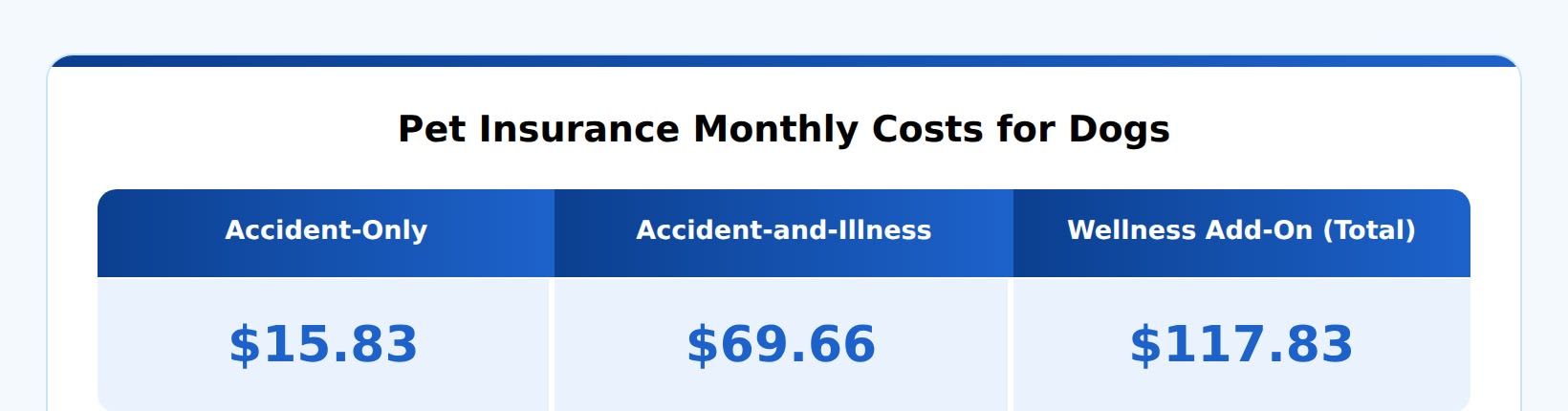
According to the North American Pet Health Insurance Association (NAPHIA), a standard accident-and-illness plan for dogs typically runs just under $70 per month, with some exceptions. Premiums for an older dog can be two to three times higher than the same coverage for a young, healthy dog. Breed matters too – mixed-breed dogs are typically less expensive to insure than purebreds that are prone to hereditary conditions. Your location also affects rates.
Accident-only plans are the least expensive plan type because they only cover accidents. These average about $16 per month.
Adding a wellness add-on to an accident-and-illness policy raises your total premium to about $118 per month.
Credit: PawPay
Pet Insurance Costs for Cats
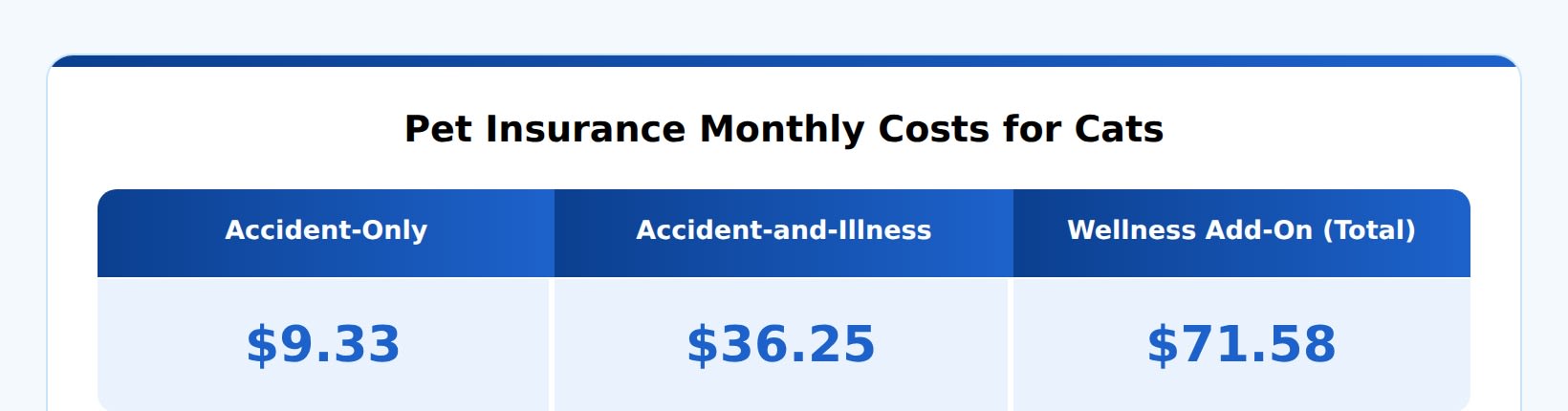
Accident-and-illness plans for cats are usually about $36 per month, according to NAPHIA data. As with dogs, age and location cause the most variation – an older cat costs more to insure than a kitten, and premiums can vary by a factor of two or three depending on where you live.
Accident-only plans for cats average $9 monthly. A wellness add-on raises an accident-and-illness policy cost to about $72 per month.
Credit: PawPay
The Cost of Veterinary Care
Pet insurance exists because veterinary care isn’t cheap. The cost of a vet visit varies significantly depending on the reason for the visit. Vaccines can be between $25 and $70, according to data from realvetcost.com. A series of vaccines could be as high as $300 spread over multiple visits. Wellness exam fees range from $50 to $120.
Visits for accidents and illnesses can cost much more, depending on the severity. For example, realvetcost.com reports that an X-ray can be $400, and the total cost of a vet visit to diagnose and treat an illness or injury could exceed $2,000.
Serious emergencies or illnesses such as cancer can cost even more.
Pet insurance was built to help pet owners financially navigate around scenarios like those.
Data from a PetSmart Charities-Gallup study found that 52% of U.S. pet parents had skipped or declined veterinary care, and about 7 in 10 of them cited cost or value as the reason.
Using Your Policy at the Vet
PawPay requires pet insurance, but it works directly with insurers and vets to pay the amount the insurer will cover at the counter. With PawPay, you pay only your share at checkout — your deductible, coinsurance, and any non-covered charges — instead of paying the full bill and waiting for your insurer to pay you back. Learn how direct pay works.
How to Save Money on Pet Insurance
Ask about discounts – insuring multiple pets, working in veterinary or animal care, and military service are common ways to save. Get quotes from at least three insurers before choosing a plan, since pricing for similar coverage can vary significantly between companies.
You can also customize your policy to fit your budget; raising your deductible, lowering your reimbursement rate, and choosing a lower annual coverage limit can each reduce your premium, sometimes by as much as 15%. Just know that a higher deductible or lower limits mean you’d be responsible for paying more in the event you file a claim.
What If You Can’t Afford Pet Insurance?
Not being able to afford a monthly premium doesn’t mean you don’t have options to manage vet costs. Some vet clinics work with third-party services to finance bills so you can pay them over time. In some cases, local animal welfare groups can offer financial assistance to families who can’t afford vet bills.
FAQ
Why does pet insurance get more expensive as a pet ages?
Older pets are statistically more likely to need veterinary care, so insurers charge higher premiums to account for that increased risk. Insuring a pet when they’re young helps pet owners save money over their lifetime.
Will my pet insurance premium go up even if I don’t file a claim?
Your pet’s breed and age, industry-wide rate changes, and other factors are used to determine rates. Claims history matters too, but if you don’t file any claims, you still may see a premium hike.
Keep the thread going
 3 min
What Is Pet Insurance?
Pet insurance helps cover eligible vet bills in exchange for a monthly premium. Learn how it works, the main types of plans, what’s typically covered and excluded, average costs for dogs and cats, and when to enroll your pet.
Open next guide 3 min
Pet Insurance That Pays the Vet Directly
Most pet insurance makes you pay the vet first and wait for a claim payout. Learn how vet direct pay works, its pros and cons, and how platforms like PawPay pay the clinic so you only cover your share at checkout.
Open next guide 3 min
What Does Pet Insurance Cover?
What pet insurance covers depends on your policy type. Learn how coverage works for accidents, illnesses, hereditary conditions, cancer, dental, and end-of-life care, and which costs are commonly excluded or need an add-on.
Open next guide