What Is a Pet Insurance Waiting Period?
A pet insurance waiting period is the time between enrolling and when your policy starts paying claims. Learn why waiting periods exist, what happens if your pet gets sick during one, and steps to avoid coverage gaps.

Written by
Jason Devaney
Reviewed by
Kate Yanov, Licensed Broker
Focus
Pet Guides
A pet insurance waiting period is the time between when you enroll and when your policy will actually pay a claim. It exists so pet owners can’t sign up for coverage the day after an accident or diagnosis and expect it to be paid.
Why Pet Insurance Has Waiting Periods
Pet insurance exists to financially protect pet owners against unexpected accidents and illnesses. Without a waiting period, an owner could buy a policy immediately after an accident, receive a reimbursement check from their insurer, and then cancel the policy. A waiting period protects insurance companies against this practice.
Mark Friedlander, senior director of media relations at the Insurance Information Institute, said pet owners are turning to pet insurance more and more.
“Pets are deeply integrated into American households, but with that companionship comes financial responsibility and risk,” Friedlander said. “Demand for pet insurance continues to rise as veterinary costs increase and owners seek greater financial protection.”
How Long Do Waiting Periods Last?
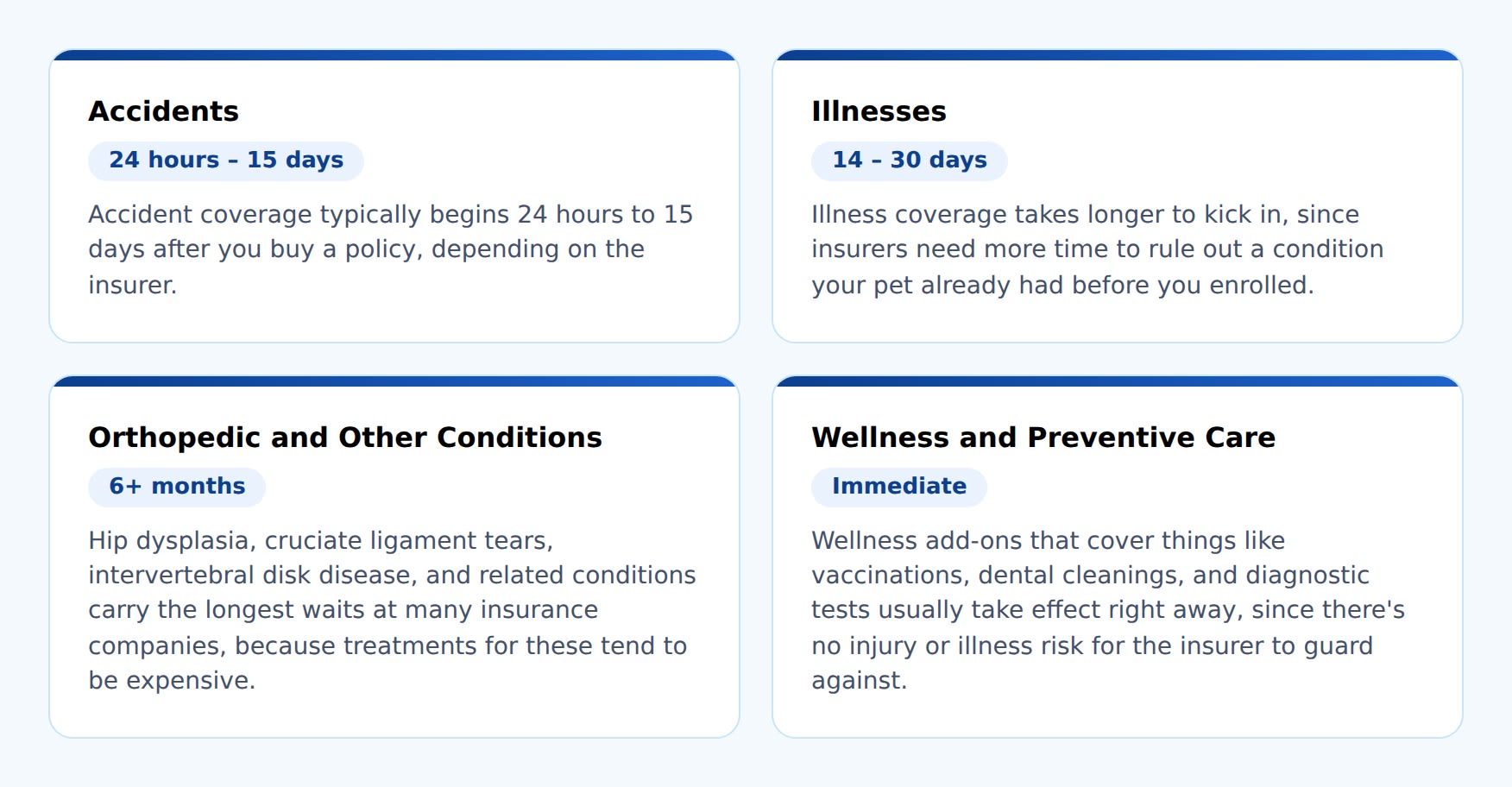
Credit: PawPay
What Happens if Your Pet Gets Sick During the Waiting Period
If your pet shows symptoms of an illness or gets hurt after you buy a policy but during the waiting period, that condition is treated as pre-existing and won’t be covered, even after the waiting period ends. This holds whether or not you knew about it at the time – if the symptoms trace back to the waiting period, the claim can still be denied once coverage is active. Some insurers make an exception for a pre-existing condition that’s later cured or fully resolved, so confirm your insurer’s specific policy rather than assume a condition is excluded for good.
Can You Avoid or Shorten a Waiting Period?
Some insurers will shorten or waive part of a waiting period if you can show proof of continuous coverage from a previous policy, or if a vet exam confirms your pet isn’t showing symptoms of the condition in question. Switching providers doesn’t carry your waiting period over, either – canceling one policy to enroll in another starts the clock at zero.
Steps to Take
- Enroll early. Buy a policy as soon as your pet is eligible, typically when they’re 6 to 8 weeks old. This will reduce the chance they develop a condition before coverage starts.
- Watch for breed-specific risks. Consider an insurer’s orthopedic waiting periods if your pet’s breed is prone to conditions like hip dysplasia or ligament injuries.
- Avoid coverage gaps. If you’re switching providers, line up the new policy before canceling the old one.
- Ask about a vet exam. Some insurers will shorten part of a waiting period if a vet exam confirms your pet isn’t showing symptoms of the condition in question.
FAQ
Does the waiting period reset if I switch pet insurance companies?
Yes, a new insurance provider starts its own waiting period.
Can I get pet insurance if my pet needs surgery soon?
You can sign up, but the surgery likely won’t be covered if it falls within the waiting period or if the condition requiring it existed before you enrolled.
Can you get pet insurance after your pet has already been diagnosed with a condition?
You can enroll, but that condition will be treated as pre-existing and excluded from coverage, unless your insurer makes an exception for a condition that’s since been cured.
Keep the thread going
 3 min
What Is Pet Insurance?
Pet insurance helps cover eligible vet bills in exchange for a monthly premium. Learn how it works, the main types of plans, what’s typically covered and excluded, average costs for dogs and cats, and when to enroll your pet.
Open next guide 3 min
Pet Insurance That Pays the Vet Directly
Most pet insurance makes you pay the vet first and wait for a claim payout. Learn how vet direct pay works, its pros and cons, and how platforms like PawPay pay the clinic so you only cover your share at checkout.
Open next guide 3 min
How Much Is Pet Insurance?
Pet insurance averages about $70 a month for dogs and $36 for cats on an accident-and-illness plan. See what drives your premium, typical costs by plan type, what vet care costs, and practical ways to save.
Open next guide