
What Is a Pet Insurance Deductible?
A pet insurance deductible is what you pay out of pocket before your policy pays on covered claims. See how it works with your reimbursement rate, how it affects your premium, and how to pick the right amount for your pet.

Written by
Jason Devaney
Reviewed by
Kate Yanov, Licensed Broker
Focus
Pet Guides
A deductible is the amount you pay out of pocket before your insurance starts paying on covered claims. You choose the amount when you buy the policy, and it affects your monthly premium.
How a Pet Insurance Deductible Works
Your deductible works alongside two other levers – your reimbursement rate and your annual coverage limit – to determine what you actually get paid on a claim. Some insurers let you customize all three; others fix one or more. Only fees for services your policy covers count toward meeting your deductible, and until you meet it, you’re responsible for the full cost of a covered vet visit.
Types of Pet Insurance Deductibles
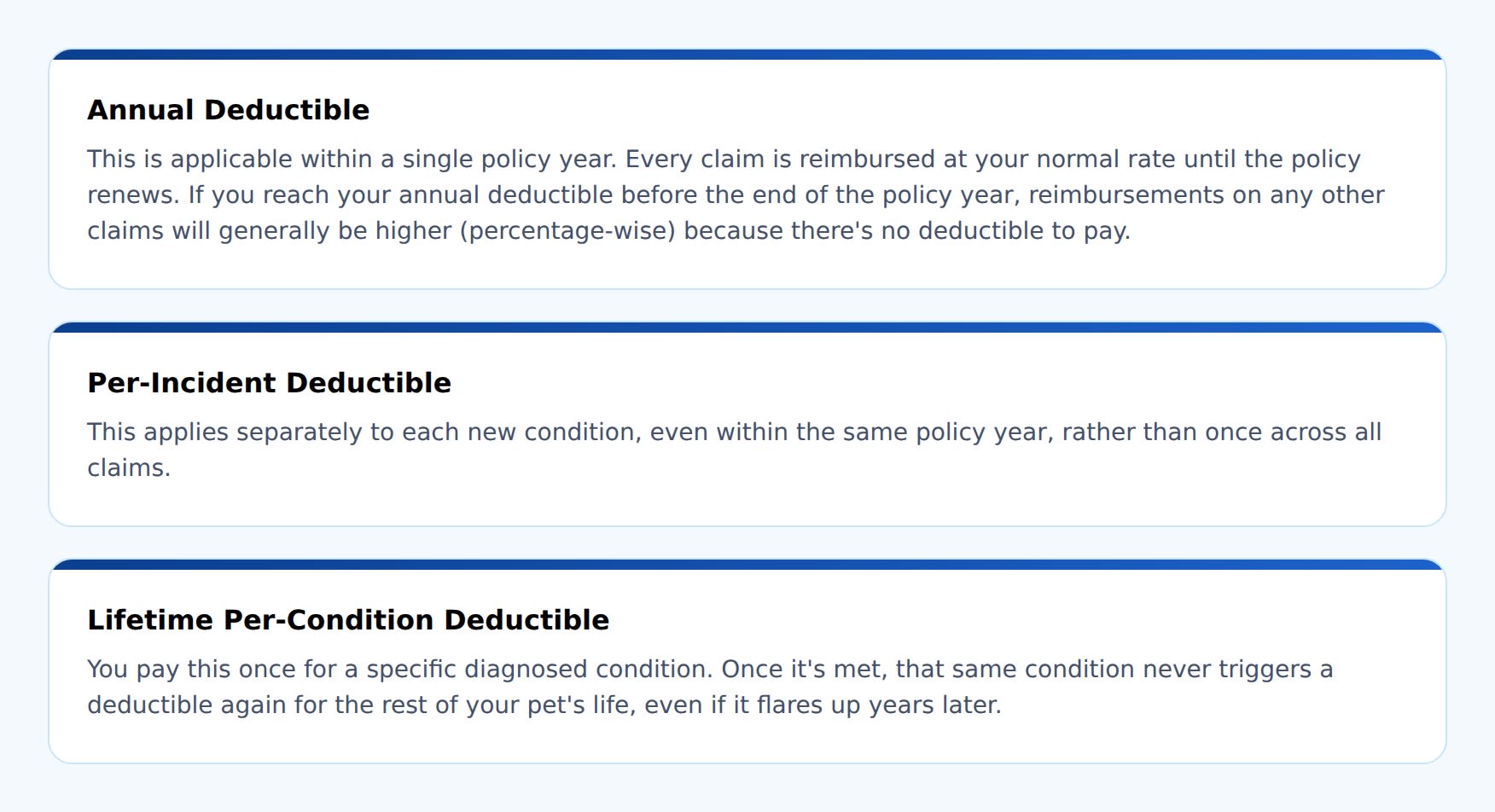
Credit: PawPay
Deductible vs. Reimbursement
Your pet insurance deductible is subtracted from the bill, and your reimbursement rate applies to the remaining amount. For example:
You have a $500 annual deductible and your first claim of the year is $600. Your insurer reimburses your rate on the remaining $100. If you submit a second claim of $300 later that year, your reimbursement rate applies to the full amount because you’ve met your annual deductible. A 70% reimbursement rate means you would owe $90 and the insurer would send you $210.
How Your Deductible Affects Your Premium
A lower deductible means you’ll pay more per month because the insurer is taking on more of the cost upfront. A higher deductible lowers your monthly cost. Most insurers offer deductibles of $100, $250, or $500 as standard options, though some carriers offer $2,500 deductibles.
What Doesn’t Count Toward Your Deductible
Not all vet costs are covered under pet insurance and, therefore, don’t count toward your deductible. These include:
- Routine and wellness care, like annual exams and vaccinations
- Pre-existing conditions
- Elective procedures
- Anything not covered by your specific policy
How to Choose a Deductible
Balance your monthly budget against what you could comfortably pay if you had to file a claim tomorrow. A young, healthy pet with a low breed-related risk can often justify a higher deductible in exchange for a lower premium, while an older pet or one prone to chronic conditions may be worth a lower deductible even at a higher monthly cost. Keep in mind that you can usually raise your deductible at any time, but lowering it is typically restricted to your policy’s renewal period.
FAQ
Does a claim less than my deductible still count toward it?
Yes. For an annual deductible, smaller claims add up until you meet the full amount.
Is a higher or lower deductible better?
This depends on your budget. You’ll pay more per month for a lower deductible, but you’ll get a higher reimbursement payment for any claims you file. A higher deductible lowers your premium payment amount but increases your out-of-pocket cost for a covered claim.
Keep the thread going
 3 min
What Is Pet Insurance?
Pet insurance helps cover eligible vet bills in exchange for a monthly premium. Learn how it works, the main types of plans, what’s typically covered and excluded, average costs for dogs and cats, and when to enroll your pet.
Open next guide 3 min
Pet Insurance That Pays the Vet Directly
Most pet insurance makes you pay the vet first and wait for a claim payout. Learn how vet direct pay works, its pros and cons, and how platforms like PawPay pay the clinic so you only cover your share at checkout.
Open next guide 3 min
How Much Is Pet Insurance?
Pet insurance averages about $70 a month for dogs and $36 for cats on an accident-and-illness plan. See what drives your premium, typical costs by plan type, what vet care costs, and practical ways to save.
Open next guide