Do All Vets Take Pet Insurance?
Most pet insurance policies don’t use vet networks, so nearly any licensed vet works with your coverage. Learn how claims are paid, whether specialists and emergency clinics are included, and how direct pay options work.

Written by
Jason Devaney
Reviewed by
Kate Yanov, Licensed Broker
Focus
Pet Guides
Nearly every licensed vet works with pet insurance, because most policies don’t use provider networks the way human health insurance does. You pay the vet directly and get reimbursed afterward, so there’s nothing for the vet to “accept.”
Why Vets Don’t Need to ‘Accept’ Pet Insurance
Pet insurance doesn’t work like human health insurance, where a doctor either is or isn’t in-network. There’s no copay at the counter and no in-network or out-of-network vet, because the insurer’s relationship is with you, the pet owner, not with the vet. The vet simply treats your pet and bills you the same way they would if you had no insurance at all.
Mark Friedlander, senior director of media relations at the Insurance Information Institute (Triple-I), said pet insurance is becoming a popular insurance product as families seek better financial protection.
“The U.S. pet insurance market has grown by more than 10% annually since at least 2018,” said Friedlander, citing a Triple-I analysis.
How Reimbursement Works
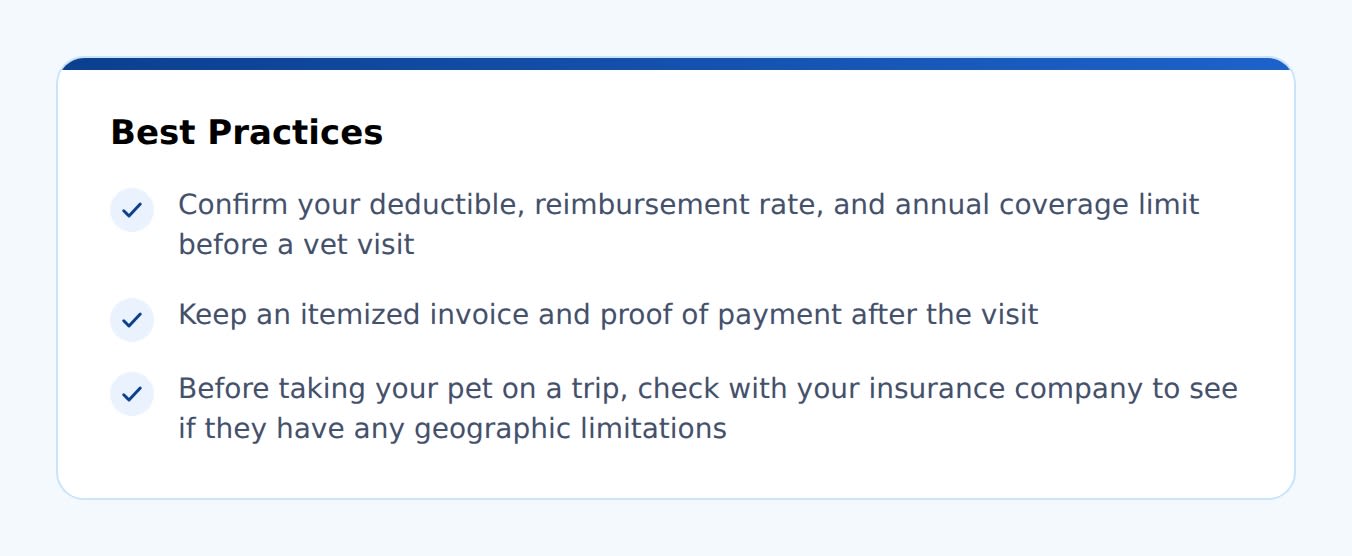
You pay the full amount due after a visit and then submit an itemized invoice and proof of payment to your insurance company. The insurer calculates your payout based on your deductible, reimbursement rate, and annual coverage limit, and sends you the amount due. Most claims are processed within five to 10 days. If you can’t cover the full bill upfront, see how to get help with vet bills.
Do Specialists and Emergency Clinics Work With Pet Insurance?
A regular vet, a specialist such as a dermatologist or oncologist, and an emergency clinic all work the same way under a reimbursement model. Coverage generally extends to any licensed vet while you’re traveling domestically, though it’s worth checking your specific policy for any geographic limitations before a trip.
Credit: PawPay
What About Insurance That Pays the Vet Directly?
A small number of providers offer direct-to-vet payment instead of reimbursing you after the fact, but this depends on the specific vet agreeing to accept payment that way – it isn’t automatic just because your policy offers it.
PawPay is a platform built specifically for this: It’s not a pet insurance company itself, but it connects pet owners, insurers, and vets so the vet can be paid directly instead of you fronting the bill and waiting for reimbursement. With this model, you pay your share at checkout (your deductible, coinsurance, and any non-covered charges). PawPay pays the clinic the rest, submits the claim to your insurer, and is reimbursed by your insurer for the covered portion.
FAQ
Do I need to ask my vet if they take pet insurance before booking an appointment?
No. Since coverage isn’t network-based, there’s no acceptance process to confirm ahead of time – any licensed vet works the same way, regardless of which insurer you use.
Does my vet need to file anything with my insurance company?
No. Filing the claim is a pet owner’s responsibility – the vet just provides the itemized invoice and medical records you’ll need to submit it. With a direct-pay service like PawPay, however, PawPay pays the clinic the covered amount, submits the claim to your insurer on your behalf, and is reimbursed by your insurer.
What happens to my coverage if I switch vets?
Nothing changes. Your policy is tied to you and your pet, not to a specific clinic, so switching vets doesn’t affect your coverage or reset anything.
Keep the thread going
 3 min
What Is Pet Insurance?
Pet insurance helps cover eligible vet bills in exchange for a monthly premium. Learn how it works, the main types of plans, what’s typically covered and excluded, average costs for dogs and cats, and when to enroll your pet.
Open next guide 3 min
Pet Insurance That Pays the Vet Directly
Most pet insurance makes you pay the vet first and wait for a claim payout. Learn how vet direct pay works, its pros and cons, and how platforms like PawPay pay the clinic so you only cover your share at checkout.
Open next guide 3 min
How Much Is Pet Insurance?
Pet insurance averages about $70 a month for dogs and $36 for cats on an accident-and-illness plan. See what drives your premium, typical costs by plan type, what vet care costs, and practical ways to save.
Open next guide